
Financial Literacy
Total household debt hit $18.8 trillion in early 2026 and credit card delinquencies are climbing toward levels last seen during the 2008 financial crisis, compressing budgets for millions of American households.
What to Know
- Total U.S. household debt reached an all-time high of $18.8 trillion in Q1 2026
- Credit card delinquency rates hit 13.1%, the highest level in 16 years
- Average APR on cards accruing interest reached 21.52%, with new card offers averaging 23.79%
- Households owe $591 billion more than they did one year ago
- Nearly half of all cardholders carried a balance at least one month in the past year
American households are carrying more debt than at any point in recorded history. Federal Reserve Bank of New York data reported by the Center for Responsible Lending shows total household debt reached $18.8 trillion in Q1 2026, adding $18 billion in a single quarter on top of $591 billion added over the prior year. Credit card delinquency rates are now at their highest level in 16 years, approaching territory last seen during the 2008 financial crisis.
For ordinary American households, the debt load is not an abstraction. Record-high interest rates on credit cards mean that every unpaid balance compounds faster than it did at any prior point in modern consumer finance, and falling behind by even one month now carries a steeper long-term cost than most borrowers realize.
How the Debt Pile Grew
Credit card debt alone reached $1.252 trillion in Q1 2026, a 63% increase since Q1 2021 when balances stood at $770 billion, according to LendingTree's 2026 credit card debt analysis. That growth outpaced inflation and wage gains over the same period, meaning households added debt faster than their financial capacity to carry it.
Auto loan and student loan delinquencies moved in the same direction. Serious student loan delinquency rose from 8.0% to 10.9% between Q1 2025 and Q1 2026, and overall student loan delinquency reached 10.3%, the highest since 2020. These figures reflect a broad deterioration in household balance sheets across multiple debt categories at once.
What 21% APR Actually Costs You
Credit card interest rates have not been this high in modern consumer history, and for the nearly half of cardholders carrying a balance, that reality is quietly draining hundreds of dollars a year in purchasing power. Understanding what 21% APR actually does to a balance over time is one of the most important pieces of financial math any household can run right now.
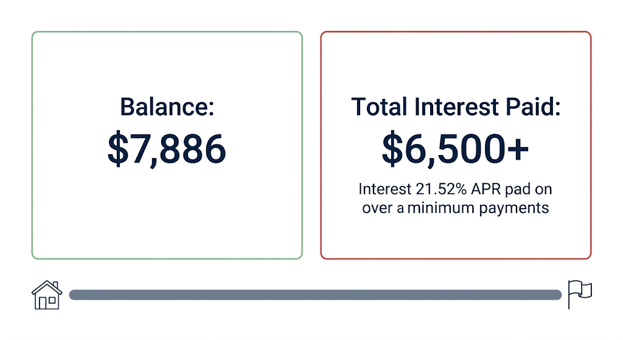
At 21% APR, interest outlasts the original purchase. Created via Gemini.
Average APRs on cards accruing interest reached 21.52% in Q1 2026, with new card offers averaging 23.79%, according to LendingTree. A household carrying the national average balance of $7,886 and making only minimum payments at that rate would pay more than $6,500 in interest alone before clearing the balance. That is money that cannot go toward rent, groceries, retirement contributions, or emergency savings.
Nearly 45% of cardholders carried a balance for at least one month in the past year, per a May 2026 Federal Reserve study. That means roughly half of all cardholders are actively paying interest at rates that exceed what most investments return over the same period, making revolving credit card debt one of the most expensive financial positions an ordinary household can hold.
What Policymakers and Borrowers Both Face
When millions of households are simultaneously cutting spending to service debt, the drag on the broader economy becomes a policy problem, not just a personal finance one. Policymakers and borrowers are now facing the same crisis from opposite ends, one managing systemic risk and the other managing a monthly statement.
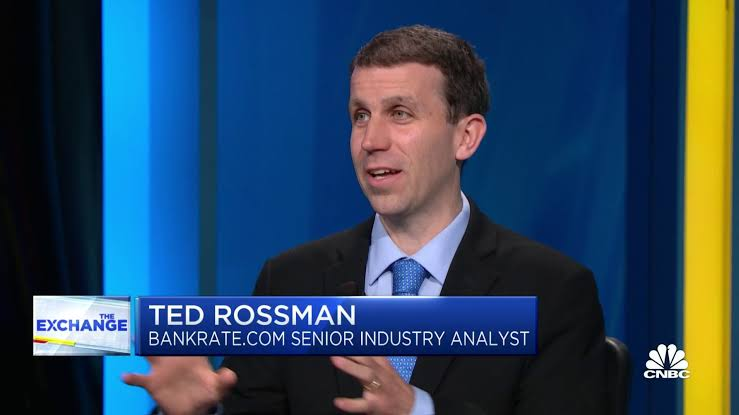
Ted Rossman, Senior Industry Analyst, Bankrate
Rossman, writing on the structural persistence of high APRs, observed
"Credit card rates are not going to fall meaningfully until the Fed cuts rates significantly, and even then issuers are slow to pass along reductions to existing cardholders."
Policymakers face a system where record debt loads constrain consumer spending, which drives roughly 70% of U.S. GDP. A debt-burdened population cutting discretionary spending to service obligations slows the broader economy without any single triggering event. For borrowers, the most direct action available is prioritizing high-rate balances, directing every available dollar above minimums toward the highest APR account first.
Wrap Up
Household debt at $18.8 trillion with delinquency rates near 2008 levels is a structural condition, not a temporary spike. It reflects years of wage stagnation, pandemic-era spending shifts, and an interest rate environment that made carrying balances significantly more expensive without a proportional rise in household income.
For ordinary Americans carrying a balance today, the math is urgent. At 21% APR, every month of inaction compounds the cost, and waiting for rates to fall before acting is a bet that has not paid off for borrowers in the two years since rates reached these levels.