
Monetary Policy
New federal rules will require covered stablecoin issuers to manage reserves, explain redemption, and submit to oversight. None of those protections makes a stablecoin an FDIC insured bank deposit.
What to Know
- The Office of the Comptroller of the Currency finalized payment stablecoin rules effective January 18, 2027.
- The rule covers specified issuers under OCC jurisdiction and certain custody activities, not every digital token or stablecoin company.
- Covered issuers must maintain eligible reserve assets and publicly disclose how holders can redeem their coins.
- OCC oversight and reserve requirements address certain risks but cannot guarantee that a holder will never face a loss or delay.
- A payment stablecoin is not an insured bank deposit, even when a bank or bank subsidiary participates in its issuance or custody.
A stablecoin tied to the dollar aims to keep each digital token worth $1. Consumers may use one to transfer funds; merchants may accept one as payment. Yet the familiar dollar value can obscure an unfamiliar question: what legal claim does the holder have, and what happens when they want cash back?
The OCC’s October final rule establishes standards for permitted issuers and foreign issuers within its jurisdiction, along with certain custody activities by institutions the OCC supervises. Those standards could make stablecoins easier to evaluate. They do not make holding a token equivalent to putting money in a checking account.
What Backs a Payment Stablecoin?
Under the final rule published in the Federal Register, covered issuers must maintain reserves for their outstanding payment stablecoins using eligible assets. Reserve requirements are meant to support redemption when holders exchange tokens for money. The rule also addresses how issuers manage liquidity and report reserve composition.
“Backed” describes assets supporting an issuer’s obligations, not a federal promise to repay every holder. Reserve quality, access to those assets, operational failures, and a surge in redemption requests still matter. Policymakers therefore need to assess whether disclosures let supervisors and customers detect problems early, not just whether an issuer reports enough assets on a given date.
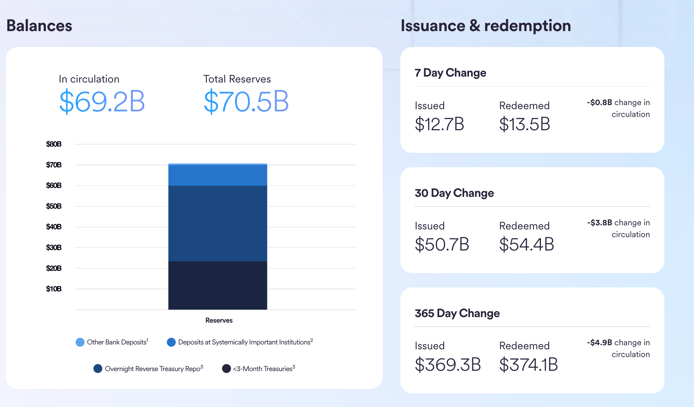
Circle’s dashboard illustrates the reserve information holders can inspect. Its figures describe USDC, not every stablecoin or compliance with the future OCC rule, via Circle.
Reserves address the promise behind the token. Redemption rules determine how a holder can exercise that promise.
Redemption Has Rules and Practical Conditions
The OCC rule requires covered issuers to publish a redemption policy. The policy must explain the process and timeframe for exchanging payment stablecoins for their stated monetary value, including applicable limitations. Under the final rule, timely redemption generally must occur within two business days after a request, subject to the rule’s conditions and lawful exceptions.
Consumers should read the issuer’s policy rather than assume that a token can always be sold instantly for $1 on an exchange. Direct redemption through an issuer may require customer screening and onboarding. A marketplace sale is a separate transaction, and its price or fees can differ from the issuer’s redemption terms.
Merchants face another practical question: does a payment provider convert received tokens into dollars, hold them, or transfer them to another custodian? Each arrangement places responsibility for access and settlement in a different place.
Custody and Supervision Are Not Deposit Insurance
Custody concerns who safeguards tokens, reserve assets, or the keys needed to control them. OCC requirements for covered custody activities aim to establish controls over that responsibility. Supervision also gives the regulator a way to review covered institutions and address weaknesses.
|
Product or arrangement |
What the customer should establish |
|
Deposit at an FDIC insured bank |
Whether the account and ownership category qualify for deposit insurance |
|
Payment stablecoin |
Who issued it, what backs it, and how the holder can redeem it |
|
Token held through a wallet or payment service |
Who controls the assets or keys, and what happens if that provider fails |
Different ways of holding digital dollars involve different legal claims and protections, via the Office of the Comptroller of the Currency and the Federal Deposit Insurance Corporation.
Neither safeguard changes the legal nature of a payment stablecoin. A token held in a wallet is not itself an FDIC insured deposit. Even when reserve assets include deposits at an insured bank, that does not mean a stablecoin holder has an insured bank account in their own name. The FDIC’s deposit insurance guidance distinguishes protected bank deposits from crypto assets.
What Users and Policymakers Should Watch
Before accepting or holding a stablecoin, consumers and merchants can identify its issuer, inspect its reserve reporting, read its direct redemption policy, and ask who holds their tokens or keys. They should also distinguish an issuer’s obligations from promises made by an exchange, wallet provider, or payment processor.
Policymakers will need to watch how these requirements work once effective: whether reserve reports remain understandable, redemptions occur under the published terms, and custody arrangements protect customers during operational trouble. The OCC has said it will announce separately when it begins accepting and processing issuer applications and waiver requests. A final rule does not mean every current issuer has already received OCC approval.
Wrap Up
Federal oversight can make payment stablecoins more transparent and impose meaningful duties on covered issuers. Reserve backing, redemption policies, custody controls, and supervision address different points where a payment arrangement could fail.
Consumers should not compress those safeguards into the word “insured.” Before treating a digital dollar as cash in the bank, they need to know who owes them redemption, how to request it, and which protections actually apply.