AI Infrastructure
DOE’s SPARK selections aim to move more electricity through existing infrastructure as data centers, manufacturers, and households compete for reliable power.
What to Know
- DOE selected 31 grid-improvement projects across 26 states under its SPARK initiative.
- Projects total $5.25 billion, including $1.9 billion in DOE funding and $3.35 billion in recipient cost sharing.
- Recipients expect to reconductor or rebuild more than 1,500 miles of transmission lines and deploy advanced grid technologies across nearly 21,000 miles.
- DOE estimates the projects will make more than 23 gigawatts of additional capacity available, roughly enough to power 16 million homes.
- Formal awards are expected between October 2026 and January 2027, so final project details may change.
America needs more electricity, but building entirely new transmission corridors can take years of siting, permitting, land acquisition, and construction. Growing demand from data centers, manufacturers, and other large power users has made that delay more consequential for grid reliability and household utility costs.
On September 24, 2026, the Department of Energy announced its intention to help fund 31 projects through the Speed to Power through Accelerated Reconductoring and other Key Advanced Transmission Technology Upgrades initiative, known as SPARK. DOE says the projects could improve grid reliability and lower electricity costs for about 100 million Americans. Federal officials still must finalize financial-assistance agreements, meaning selections are not yet completed awards.
Capacity Can Come From Existing Lines
SPARK combines $1.9 billion in DOE funding with $3.35 billion in recipient cost-share commitments, producing a total project value of $5.25 billion. Participants expect to reconductor or rebuild more than 1,500 miles of transmission lines and deploy Grid-Enhancing Technologies, or GETs, across nearly 21,000 miles.
Reconductoring replaces existing wires with higher-capacity conductors on an established route. GETs use equipment, sensors, controls, and operating tools to help grid operators understand how much electricity a line can safely carry under real-world conditions. Together, those approaches aim to relieve congestion without relying entirely on new corridors.
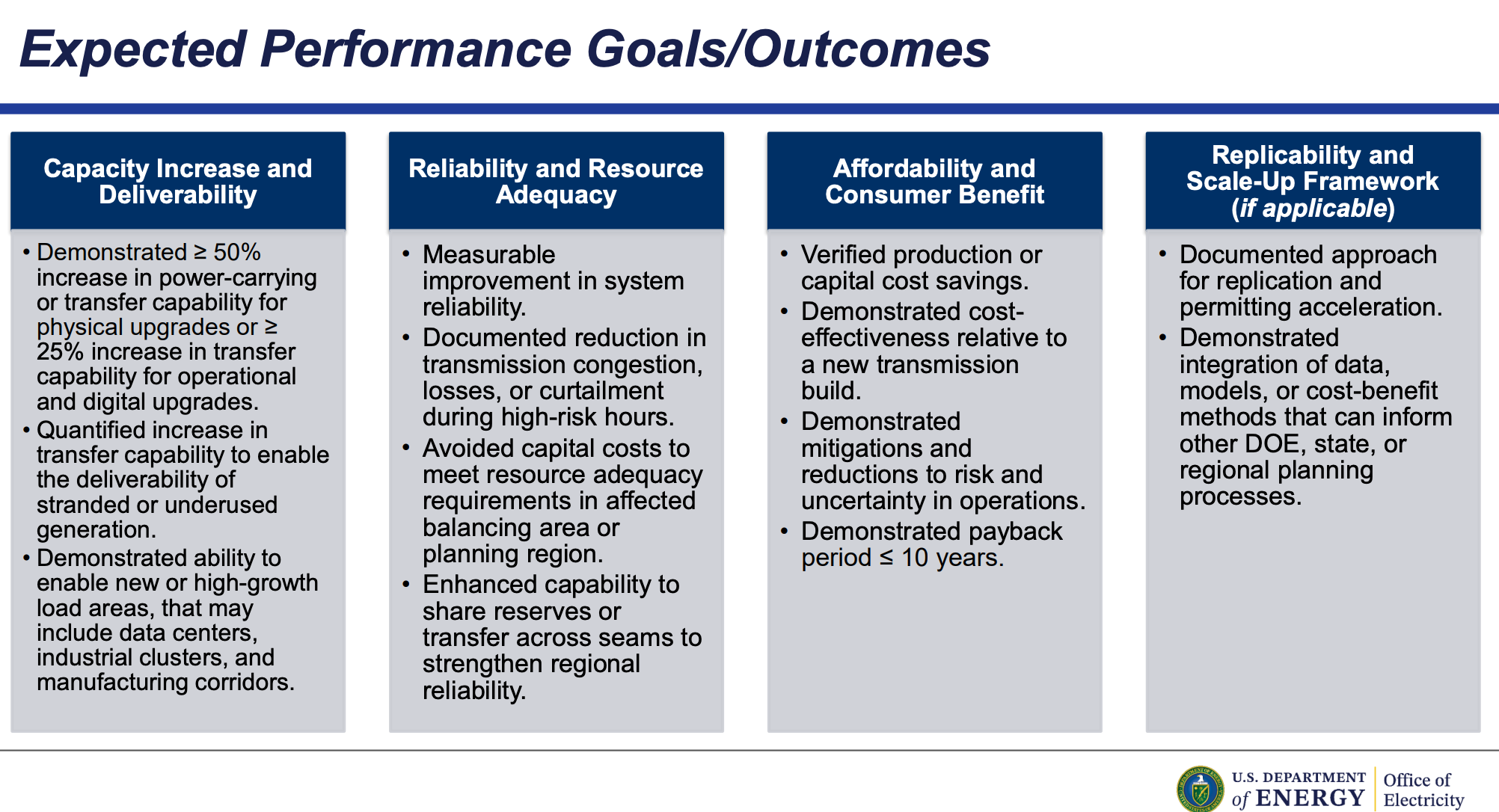
DOE’s SPARK performance goals and consumer-benefit criteria.
|
Question |
Reconductoring and GETs |
New transmission corridor |
|
Starting point |
Existing lines and rights-of-way |
New route and new land access |
|
Primary goal |
Carry more power through current infrastructure |
Add a new path for electricity |
|
Siting challenge |
Can reduce siting complexity |
Usually requires broader land, community, and permitting work |
|
Cost pressure |
Can avoid some new-corridor construction costs |
Can require major new construction and land acquisition |
|
Policy value |
Delivers targeted capacity gains faster |
Remains necessary where existing infrastructure cannot meet need |
Existing rights-of-way do not eliminate regulatory review or local concerns. They can, however, reduce the siting complexity and schedule risk associated with building an entirely new line. DOE says SPARK projects aim to avoid the multidecade timelines often required for new transmission corridors while making more productive use of infrastructure already in place.
That approach matters because capacity constraints can affect both large new customers and families who depend on an affordable, reliable grid.
23 Gigawatts Across 26 States
DOE estimates that SPARK projects will make more than 23 gigawatts of additional capacity available. Associated Press reporting describes that amount as roughly enough to power 16 million homes. Capacity does not mean every household receives newly generated electricity. Instead, it means the transmission system can move more power where it is needed.
Pennsylvania’s PPL Electric Utilities will modernize the existing Montour-Glen Brook-Susquehanna corridor through its Montour Advanced Reconductoring Project. DOE lists $71.46 million in requested federal funding and a total project value of about $142.93 million. Project materials say the upgrade can address aging-infrastructure risks while reducing siting complexity, community impacts, and schedule risk compared with new-line development.
Indiana’s Office of Energy Development will lead a project focused on the PJM-MISO seam, a key boundary between two regional grid systems. DOE lists $174.41 million in requested federal funding and a total value of approximately $348.83 million. Proposed upgrades would add transfer capability, support new generation and large loads, and reduce costs that otherwise can reach ratepayers.
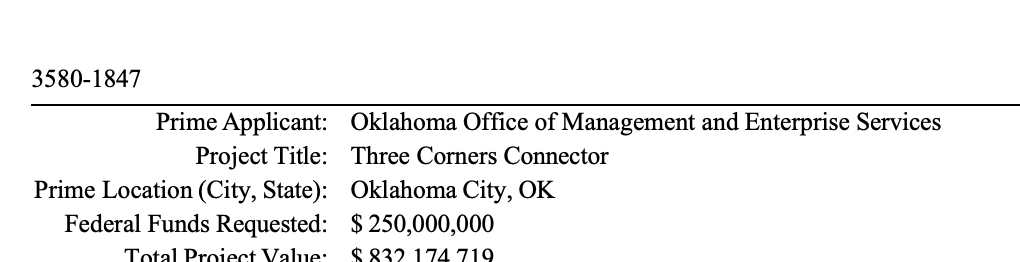
DOE summaries for PPL, Oklahoma, and Indiana SPARK projects.
Oklahoma’s Three Corners Connector would link the Southwest Power Pool in Oklahoma with the Western Electricity Coordinating Council in Colorado. DOE lists $250 million in requested federal funding and a total project value of approximately $832.17 million. Increased transfer capability between those regions could give grid operators more options when demand rises or local supplies face disruption.
Each case uses a different mechanism, but all three pursue the same outcome: more usable capacity without treating new greenfield construction as the only answer.
Reliability Benefits Must Be Measured, Not Assumed
DOE expects SPARK projects to lower operating costs, reduce congestion, improve resilience, and help protect against severe-weather disruptions. Those are important potential benefits, especially when winter demand, heat waves, or equipment failures strain the grid.
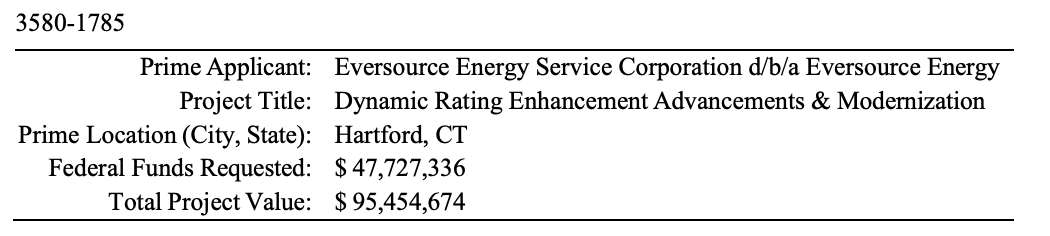
DOE project summary links reliability upgrades to customer savings.
Household savings are not automatic. Utilities still determine how to recover project costs through the regulatory process, while actual savings depend on construction results, fuel markets, electricity demand, and how well upgrades reduce congestion or outage costs. Consumers should view SPARK as a strategy to reduce cost pressure and reliability risks, not as a guaranteed reduction on the next utility bill.
Policymakers face a related responsibility. Public agencies and utilities need to report whether projects deliver the capacity, reliability, and cost outcomes used to justify federal support. Transparent performance data can show whether modernizing existing infrastructure produces better value than more expensive alternatives.
Wrap Up
SPARK represents an effort to make the current grid work harder before communities and utilities rely solely on lengthy new transmission construction. DOE’s selected projects carry a combined value of $5.25 billion and aim to unlock more than 23 gigawatts of additional capacity across 26 states.
Success will depend on completed agreements, responsible implementation, and public evidence that projects improve reliability while controlling costs. For households, the central question is straightforward: can grid upgrades meet rising electricity demand without turning every new investment into a higher monthly bill?