Monetary Policy
The Lisa Cook removal fight and Kevin Warsh’s inflation stance are testing the boundary between presidential authority and monetary policy.
What to Know
- The Trump administration has renewed its effort to remove Federal Reserve Governor Lisa Cook.
- Federal Reserve governors serve 14-year terms and may be removed by the president only “for cause.”
- The Supreme Court voted 5–4 to keep Cook in office while the case continues.
- The Court required a fair process before removal but left the meaning of “cause” for later litigation.
- President Trump’s calls for lower rates now conflict with Chair Kevin Warsh’s warnings about persistent inflation.
A dispute over mortgage documents has become a larger test of who controls American monetary policy. The Trump administration says allegations concerning Federal Reserve Governor Lisa Cook’s financial records raise questions about her fitness for office. Cook says any errors were inadvertent and do not provide a lawful basis for removing her.
The legal dispute matters beyond one governor’s position. Federal Reserve officials help determine interest-rate policy, which affects mortgages, business financing, employment, inflation, and government borrowing costs. If governors can be removed because their policy decisions conflict with presidential preferences, markets may begin treating monetary policy as an extension of the White House.
A Removal Dispute Becomes an Independence Test
President Donald Trump first attempted to remove Federal Reserve Governor Lisa Cook in August 2025. Federal Housing Finance Agency Director Bill Pulte had publicly accused Cook of identifying both a Michigan home and an Atlanta condominium as her primary residence on mortgage documents filed in 2021. Pulte referred the matter to the Justice Department. Cook has denied wrongdoing and has not been charged with a crime. Reuters reported that the allegations concern residency representations on the loans, while Cook disputes that the records establish fraud.

Federal Reserve Governor Lisa D. Cook. Federal Reserve Board.
The attempted removal was the first involving a sitting governor in the Federal Reserve’s 111-year history. Cook joined the Board in 2022 and is serving a term scheduled to end on January 31, 2038.
In Trump v. Cook, decided June 29, 2026, the Supreme Court voted 5–4 to deny the administration’s request to remove Cook while the case proceeds. Chief Justice John Roberts wrote the majority opinion, joined by Justices Sonia Sotomayor, Elena Kagan, Brett Kavanaugh, and Ketanji Brown Jackson.
The ruling addressed the procedure used for the initial removal. The Court held that the Federal Reserve Act required the administration to give Cook notice of the evidence, a meaningful opportunity to respond, and a deadline before making a final decision. The Court did not decide Cook’s constitutional due-process claim.
The Court also did not make a final decision about whether the mortgage allegations meet the statute’s substantive “for cause” standard. It held that courts can assess the validity and sufficiency of the allegations only after Cook receives the required process and the president makes a final decision.
The administration then renewed its removal effort, giving Cook formal notice and an August 26 deadline to answer the allegations. Cook responded that she had identified the Atlanta property as a vacation home in other documents and had not intended to mislead lenders. Her attorneys maintained that there was no legal basis for removal.
The new notice resolved the immediate procedural problem identified by the Court. It now puts the central substantive question in focus: what conduct is serious enough to constitute “cause” for removing a Federal Reserve governor?
What the Law Protects
The Federal Reserve Act gives governors staggered 14-year terms and permits presidential removal only “for cause.” Those protections are meant to prevent officials from losing their positions simply because an administration disagrees with their monetary-policy decisions.
The protection is not absolute. A president may remove a governor when legally sufficient cause exists. But the June 29 decision made clear that a removal cannot become final before the governor receives notice and an opportunity to respond.
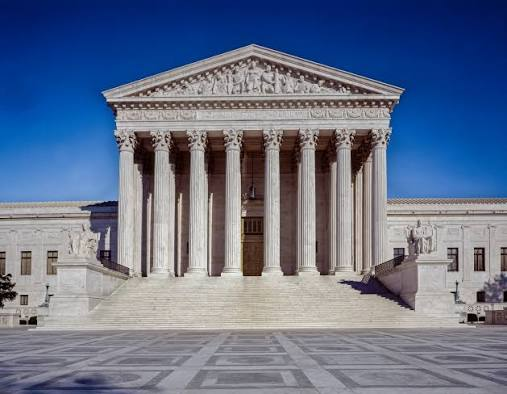
U.S. Supreme Court Building. Carol M. Highsmith/Library of Congress.
The remaining litigation concerns substance, not simply process. The administration argues that alleged financial misstatements bear directly on Cook’s integrity and her ability to serve as a financial regulator. Cook argues that disputed pre-appointment conduct does not demonstrate professional unfitness and cannot supply the statutory cause Congress required.
The courts must determine whether the renewed notice, the evidence, and the alleged conduct satisfy that standard. Their answer could define how much practical protection “for cause” gives future Federal Reserve governors.
That legal question leads directly to the economic stakes. The independence Congress built into the Federal Reserve matters because its officials make decisions that affect the cost of borrowing throughout the economy.
Why Independence Matters for Inflation and Rates
The Federal Reserve’s independence does not mean it operates without public responsibility. Congress assigned it the goals of maximum employment, stable prices, and moderate long-term interest rates.
Monetary policy is determined collectively by the Federal Open Market Committee, not by Cook or any other governor acting alone. The FOMC has 12 voting members: the seven members of the Board of Governors, the president of the Federal Reserve Bank of New York, and four rotating regional bank presidents.

Federal Open Market Committee meeting in Washington, April 2016. Federal Reserve Board.
President Trump has repeatedly called for lower interest rates, arguing that they would reduce borrowing costs. Federal Reserve Chair Kevin Warsh, by contrast, has said the Fed must keep its focus on price stability and its 2% inflation objective.
In August, Warsh said the Fed’s preferred 12-month inflation measure stood at 3.7%, while its six-month measure was 4.1%. He said those figures showed inflation remained above the Fed’s target and warned that policymakers must focus on underlying price pressures. The Federal Reserve’s July statement likewise said inflation remained elevated relative to its 2% goal.
That creates a direct policy clash. The president’s preference for lower rates emphasizes immediate relief for borrowers, while Warsh’s warning points toward holding rates higher, or raising them if inflation does not improve, to prevent price increases from becoming entrenched. Neither choice is cost-free: lower rates can support credit and spending, while tighter policy can help protect purchasing power but raise borrowing costs.
For households, the issue is tangible. Mortgage payments, auto loans, credit-card balances, savings returns, and grocery prices all respond differently to interest-rate decisions. Market confidence depends on the belief that the Fed will weigh those trade-offs against economic data, rather than political pressure.
Wrap Up
The Cook dispute involves more than the interpretation of mortgage documents. The Supreme Court’s June 29 ruling required a lawful process before removal, but the continuing case will decide whether the allegations amount to statutory “cause.”
That unresolved legal standard matters because Federal Reserve governors participate in decisions that affect every borrower, saver, and business in the country. The dispute also arrives as the White House urges lower rates and the Fed chair warns that inflation remains above target.
The larger economic question is whether households, businesses, and investors can continue trusting that interest rates are set to control inflation and support employment. That confidence depends not only on the Fed’s decisions, but also on the independence and legitimacy of the process used to make them.