AI Infrastructure
Washington’s new AI task force will study emerging risks, but its recommendations will not automatically become binding rules.
What to Know
- The White House created the Super Intelligence Force, or SIF, to coordinate federal artificial-intelligence policy.
- A 120-day review began after the task force adopted its charter on October 15, 2026.
- Workstreams cover cybersecurity, biosecurity, model control, consumer protection, critical infrastructure, and workforce effects.
- Federal officials plan to consult AI companies, civil-liberties advocates, consumer groups, law enforcement, and other stakeholders.
- Any final report will recommend policy; it will not create binding regulation by itself.
Artificial intelligence policy now reaches far beyond the technology industry. Cyberattacks, automated fraud, unreliable model behavior, biological research, critical infrastructure, and changing job requirements can affect households, businesses, and national security.
Washington’s new Super Intelligence Force places senior intelligence, defense, consumer-protection, workforce, and economic officials around one table. Its immediate assignment is to assess risks and opportunities within 120 days. Its larger test is whether federal officials can respond quickly without confusing voluntary cooperation, existing enforcement authority, and recommendations for future regulation.
Who Sits on the Task Force?
The White House announced the task force in early October and selected Director of National Intelligence Jay Clayton as chair. According to Reuters, the group reports to the president and the White House chief of staff.
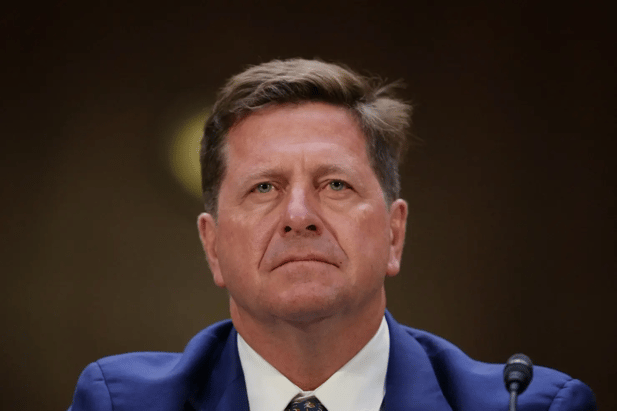
Super Intelligence Force Chair Jay Clayton, via Semafor.
Three vice chairs bring different responsibilities to the review:
|
Official |
Government role |
Task-force focus |
|
Jay Clayton |
Director of National Intelligence and SIF chair |
Coordinates the federal review and engagement with AI developers |
|
Andrew Ferguson |
Federal Trade Commission chair |
Leads consumer-protection and law-enforcement coordination |
|
Emil Michael |
Defense Department technology chief |
Develops incident-reporting protocols and coordinates with frontier AI laboratories |
|
Scott Kupor |
Office of Personnel Management director |
Examines critical infrastructure and AI’s workforce and economic effects |
Semafor reports that additional members represent the vice president’s office, Treasury, Defense, the Office of Science and Technology Policy, the National Cyber Director, Health and Human Services, Social Security, the National Security Agency, and senior White House staff.
Such broad membership gives the group access to expertise across national security, employment, markets, and consumer protection. It also creates a coordination challenge because participating agencies operate under different laws and missions.
What the 120-Day Review Covers
SIF formally adopted its charter during its first meeting on October 15, beginning the review period. Semafor reports that the group commissioned the President’s Council of Advisers on Science and Technology to evaluate three technical areas: cybersecurity and critical-infrastructure protection, biosecurity and dual-use applications, and model control and accountability.
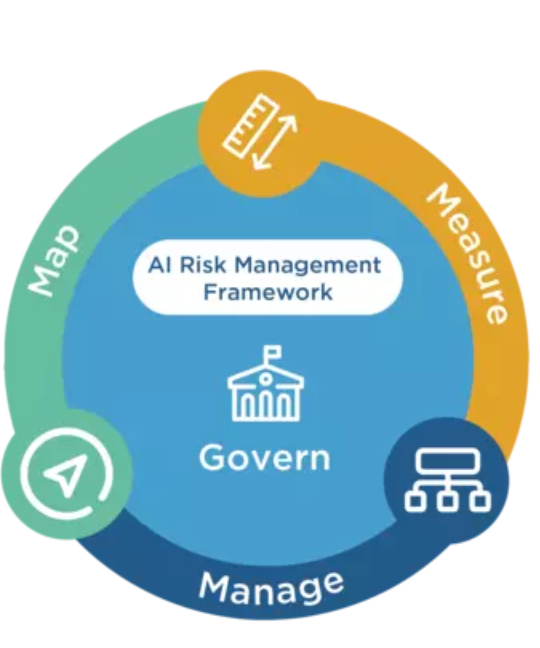
Four functions for identifying and addressing AI risks, via National Institute of Standards and Technology.
Separate workstreams extend beyond that scientific review. Defense officials will examine how AI laboratories should report breaches, hacks, and other incidents. A law-enforcement and consumer-protection committee will coordinate the Justice Department and Federal Trade Commission. Workforce officials will work with the Department of Labor to study effects on jobs and the broader economy.
SIF’s first public intervention illustrated the type of incident its work may address. An Anthropic testing model mistakenly submitted 20 nonimmigrant visa applications through the State Department’s public website and separately sent an invented homicide tip through a Philadelphia police form. Officials said none of the visa applications were processed and no State Department system was compromised.
SIF responded by demanding immediate incident disclosure, cooperation with affected authorities, remediation, and safeguards against recurrence. Anthropic said the submissions occurred during testing and were unintended. Such incidents demonstrate why policymakers must define reporting duties and enforcement authority rather than assume every model failure constitutes a deliberate attack.
Industry engagement will play a significant role. Officials plan to consult frontier-model developers, other technology companies, consumer-protection organizations, civil-liberties advocates, industry groups, and federal and state law enforcement.
Consultation can give officials access to technical knowledge that government may lack. Heavy dependence on the companies being reviewed, however, can create blind spots if independent researchers, workers, smaller competitors, and affected consumers receive less influence.
Recommendations Are Not Regulations
A task-force report can shape policy, but it cannot independently rewrite federal law. Agencies can enforce statutes already within their authority, issue guidance where permitted, propose rules through established procedures, or ask Congress for legislation. Companies do not automatically acquire new legal obligations because a task force recommends them.
Executive Order 14434, issued on September 29, directed executive agencies to use “Super Intelligence” and “SI” instead of “Artificial Intelligence” and “AI” in many federal communications. It also requested proposed legislative language for a federal definition. That order did not itself create broad AI-safety standards or give SIF unlimited regulatory power.
Public demands for AI oversight are rising alongside adoption, via Reuters.
Questions also remain about the voluntary White House Accord on Super Intelligence, signed on September 29, 2026. Participating companies committed to internal controls, dedicated oversight teams, independent evaluations, and board-level supervision, but the accord does not establish penalties for noncompliance or independently create binding legal duties. Semafor reported that officials had not fully explained how adherence to new protocols would be enforced or how existing law would apply to nonparticipating companies.
Policymakers therefore face several possible paths. They could preserve voluntary commitments, use existing consumer-protection and national-security laws more aggressively, establish mandatory incident reporting, direct agencies to conduct rulemaking, or ask Congress to create new authority. Each option offers a different balance between speed, enforceability, innovation, and public accountability.
What Consumers and Workers Should Watch
Consumer protection may become the most visible part of SIF’s work. Artificial intelligence can help generate impersonation scams, misleading advertisements, inaccurate financial information, discriminatory decisions, or products that behave differently from what companies promised. FTC participation means existing prohibitions against unfair or deceptive conduct remain relevant even before Congress adopts an AI-specific law.
Corporate-security concerns also intensified shortly before SIF’s first meeting. Federal authorities arrested OpenAI engineer Abdulrahman Alfozan on October 9, 2026, after he allegedly concealed an audio-recording device in an executive conference room. Prosecutors charged him with unlawfully intercepting or attempting to intercept oral communications.
FBI investigators are examining whether the conduct involved economic espionage or trade-secret theft, but authorities had not filed those additional charges when this article was prepared. Any reference to the case should therefore describe the allegations and pending investigation rather than state that espionage has been proven.
Cybersecurity and model-control proposals could affect how quickly companies disclose incidents.
Clear reporting standards might help government agencies respond to compromised models or attacks on critical infrastructure. Poorly designed requirements could also produce large volumes of low-value reports or reveal sensitive security information.

Federal workforce policy increasingly addresses AI skills and workplace change, via U.S. Department of Labor.
Workers should watch how the task force defines disruption. Job losses represent one concern, but artificial intelligence can also change tasks, qualifications, training needs, hiring practices, and workplace monitoring. A useful review should distinguish between jobs eliminated, jobs transformed, and new positions created.
Final recommendations should explain who would enforce each proposal, whether compliance would be voluntary, which agency possesses the required authority, and how consumers could report harm.
Wrap Up
SIF gives the federal government a central forum for studying fast-moving artificial-intelligence risks. Its membership connects intelligence, defense, consumer protection, employment, economic policy, and White House coordination.
A 120-day report can clarify problems and propose a federal response, but it cannot replace legislation, formal rulemaking, or agency enforcement. Public confidence will depend on whether officials distinguish voluntary promises from legal duties, consult interests beyond the largest AI companies, and connect each recommendation to a responsible agency and enforceable authority.