Financial Literacy
Hidden prescription middlemen promise savings, yet their pricing rules can leave patients paying more at pharmacy counters.
What to Know
- The proposed Caremark settlement would lock in $8.5 billion in pricing and reimbursement reforms over 10 years, with up to $4.5 billion more possible through point-of-sale rebates.
- Eligible members could receive insulin cost protection of $25 per month, depending on sponsor participation and qualifying coverage.
- The agreement targets 3 pricing practices by limiting rebate guarantees, spread pricing, and fees tied to drug list prices.
- The deal affects 1 major PBM, so broader savings will depend on enforcement, employer choices, competitor responses, and wider reform.
- Eligible TrumpRx purchases may count toward deductibles only after required legal changes take effect.
Prescription prices are shaped before patients reach the pharmacy counter. Pharmacy benefit managers, or PBMs, negotiate with manufacturers, build formularies, and determine pharmacy payments. Those duties can lower costs but also give PBMs influence over access and household spending.
The Caremark agreement targets that hidden layer, not only the manufacturer’s price. It seeks to weaken high-list-price incentives, improve transparency, and provide fairer pharmacy reimbursement. The test is whether those changes become visible savings for families.
How PBMs Became Hidden Toll Collectors
PBM contracts can include rebates, fees, and spread pricing. PBMs often favor expensive drugs with large manufacturer rebates over cheaper alternatives. Patients may then pay costs based on the higher list price, leaving them with higher out-of-pocket expenses at checkout.
The Federal Trade Commission alleged that Caremark and other PBMs used rebates that artificially inflated insulin list prices. Community pharmacies also complained that reimbursement could fall below acquisition costs, forcing them to absorb losses or stop dispensing drugs. Those pressures explain why the settlement addresses all three groups together.
Rebates can reduce premiums or plan spending without helping a patient at checkout. Removing them without replacing their value could shift costs elsewhere. That tradeoff makes the settlement terms more important than the reform promise.
Caremark’s Proposed Pricing Reforms
The Federal Trade Commission announced the agreement on July 14, 2026 after a case launched in 2024. The proposed order locks in up to $8.5 billion across 10 years and could unlock another $4.5 billion through point-of-sale rebates. The commission accepted it by a 1-0-1 vote and opened a 30-day comment period.
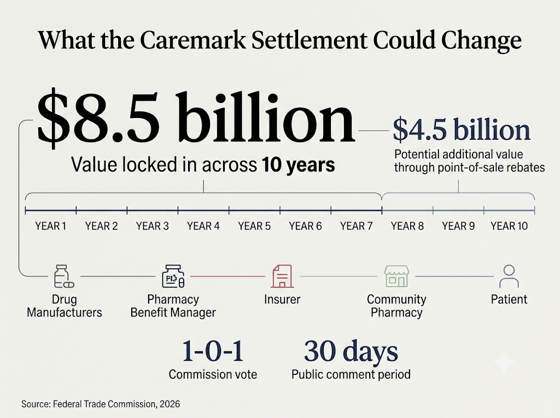
Caremark Settlement Targets Billions In Hidden Drug Costs. Created via Gemini.
Caremark would offer counter rebates, a path away from rebate guarantees and spread pricing, and fees separated from drug list prices. Community pharmacies could choose reimbursement based on acquisition cost plus a fee. These changes seek to align payment with actual costs instead of hidden arrangements.
TrumpRx purchases would not count toward every deductible immediately. The requirement depends on specified legal changes, eligible drugs, and sponsor participation. Those conditions shift attention from what the agreement promises to what patients experience.
Potential Savings at the Pharmacy Counter
Reuters reported that Caremark would cap eligible members’ insulin costs at $25 per month. The proposed order also requires affordability programs when a sponsor adopts a qualifying insulin formulary, unless it opts out in writing. Counting eligible purchases toward annual limits could make discounted prices more useful.
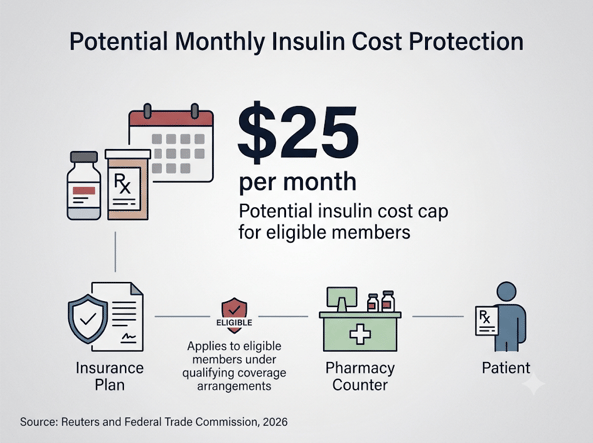
Insulin Protection Could Cap Monthly Patient Costs At Twenty-Five Dollars. Created via Gemini.
Savings will vary because employers and other sponsors choose benefit designs. A standard option does not guarantee adoption, and a lower counter price may be balanced against premiums or other expenses. Consumers need clear explanations showing how discounts, deductibles, and maximums interact.
Patients will judge the deal by receipts, while independent stores will judge whether reimbursement covers inventory and operations. Those outcomes matter more than projections. They also raise whether one agreement can change the wider market.
Limits on Patient Relief
The proposed consent order is not yet final. Because it targets only Caremark, relief depends on whether employers adopt the new options and whether competitors follow suit. Enforcement, monitoring, and future regulations will determine how much benefit reaches patients.
Without broader reform, PBMs could restructure contracts while preserving costs through other channels. A durable reset requires transparent net prices, understandable benefits, reliable pharmacy reimbursement, and oversight that compares counter savings with premiums and total plan spending.
Wrap Up
The proposed Caremark agreement would challenge rebate incentives, spread pricing, and reimbursement practices that can obscure prescription costs. Eligible patients could benefit from lower insulin costs, point-of-sale rebates, and deductible credit for qualifying TrumpRx purchases, although some provisions depend on sponsor adoption and legal changes.
Patients should watch whether those protections produce lower pharmacy receipts without increasing premiums or reducing access elsewhere. The deal’s success will depend on enforcement, clear benefit information, stable pharmacy reimbursement, and whether similar reforms extend beyond Caremark.