
Financial Literacy
FTC allegations against Greenway Auto Group show why buyers must separate an advertised vehicle price from the complete amount required to drive it home.
What to Know
- FTC analysis found that more than 92% of reviewed Greenway transactions exceeded the advertised price.
- Affected consumers paid more than $3,350 above the advertised price on average.
- Conditional rebates can lower a price only for buyers who meet requirements such as military service or use of designated financing.
- Greenway agreed to display a total price that includes every mandatory dealer charge.
- Greenway neither admitted nor denied the allegations, and the proposed order requires court approval.
Buying a vehicle often begins with an online number. A shopper compares listings, identifies an affordable car, and visits the dealership expecting that number to anchor the transaction. Added fees, mandatory packages, or unavailable rebates can turn that comparison into a substantially different purchase.
Via FTC
An FTC complaint against Greenway Auto Group alleges that advertised prices were thousands of dollars below what many buyers ultimately paid. A proposed settlement would require clearer pricing and prohibit misrepresentations about fees, financing, add-ons, and discounts. Greenway neither admitted nor denied the allegations.
What the FTC Alleges Happened
According to the FTC, Greenway operates more than 35 dealerships, although the lawsuit names its corporate entities and five Florida dealerships. FTC analysts examined certain Kia dealership transactions involving vehicles advertised on Cars.com and CarGurus from March 1, 2023, through May 6, 2026.
Complaint figures show that more than 92% of buyers paid above the advertised price.FTC allegations say those consumers paid more than $3,350 above the advertised price on average.
One example involved a used Honda CR-V advertised for $18,800. FTC filings say a couple who traveled to purchase it received a worksheet showing a price of $23,539.85 after almost $4,740 in dealer-imposed charges. Listed charges included a reconditioning fee, loyalty fee, administrative fee, dealer fee, and processing fee.
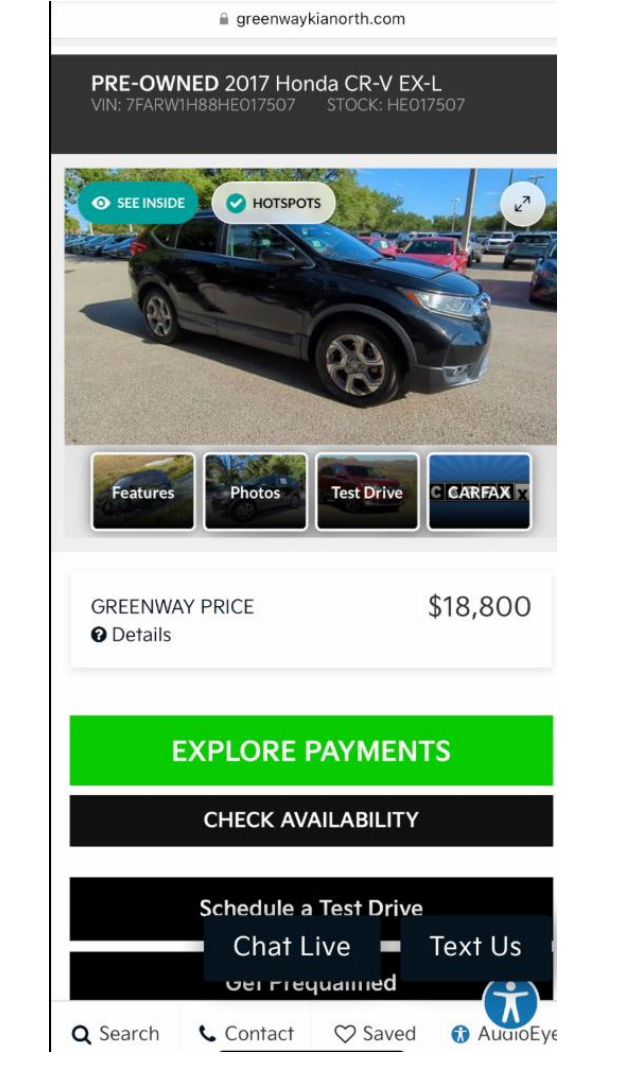
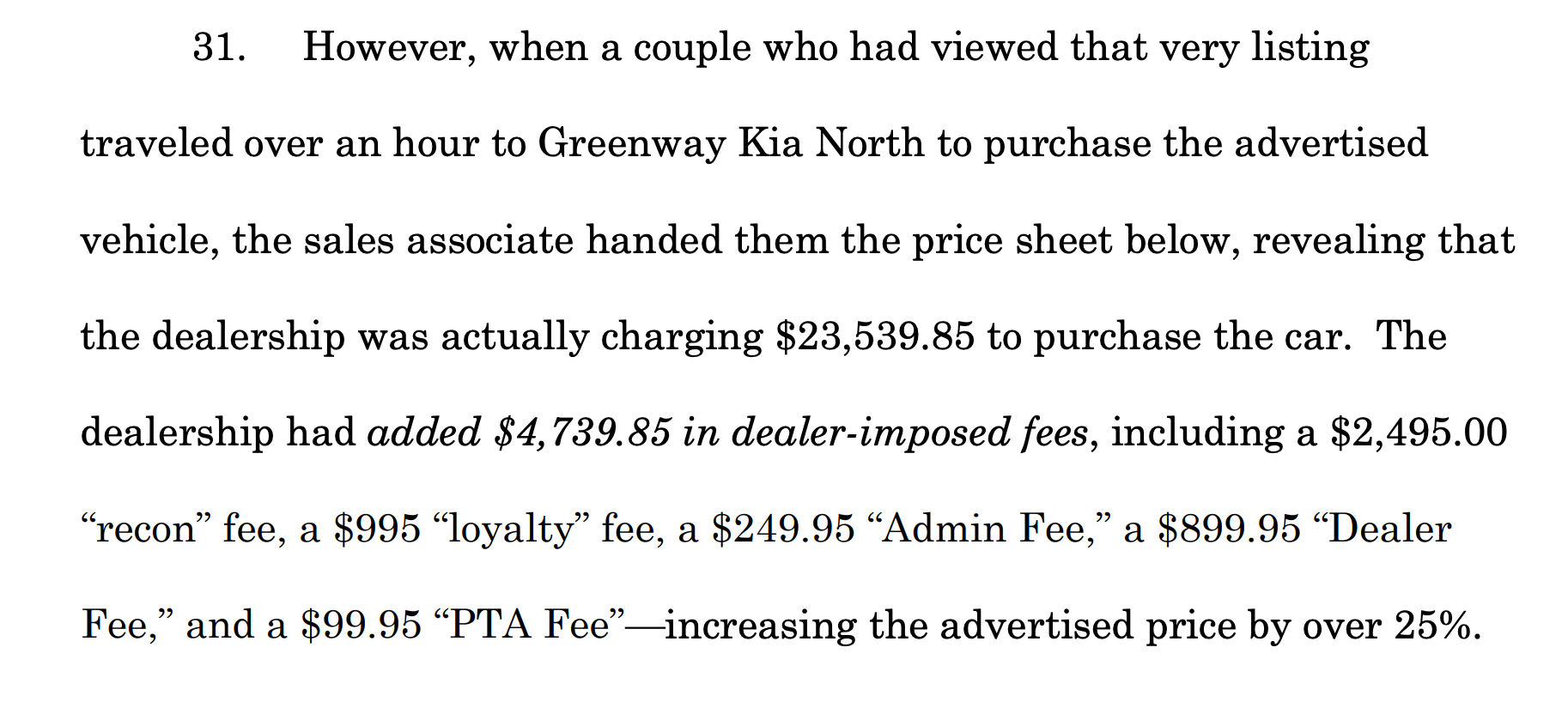
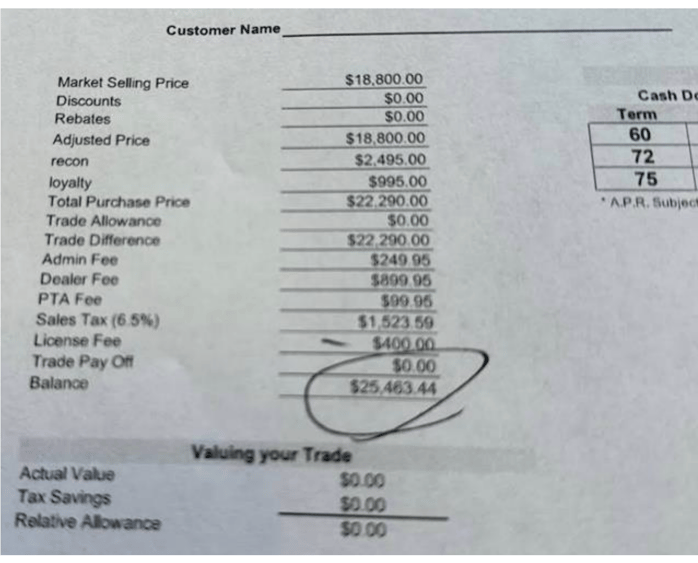
FTC complaint’s “$18,800 Greenway Price” advertisement and $23,539.85 price sheet
One advertised price increased by almost $4,740, via Federal Trade Commission.
Greenway allegedly used several methods to produce such differences. FTC allegations include mandatory dealer fees, compulsory add-on packages, inflated government charges, unexplained price increases, and discounts that many shoppers could not receive. Those remain allegations rather than judicial findings. FTC allegations also say Greenway distributed deceptive mailers telling recipients they had won thousands of dollars in cash prizes. Consumers were directed to Greenway dealerships to collect the purported winnings, but the advertised prizes were allegedly not real.
Advertised, Total, and Out-the-Door Prices Are Different
Car shoppers encounter several numbers during one purchase. Understanding what each number includes makes offers easier to compare.
|
Price term |
What it should represent |
What buyers should confirm |
|
Advertised price |
Price shown in the listing |
Whether every buyer can obtain it |
|
FTC total price |
Maximum price including mandatory dealer charges |
Which government-required charges remain excluded |
|
Out-the-door price |
Complete purchase price before financing |
Vehicle, dealer fees, add-ons, taxes, title, and registration |
|
Amount financed |
Sum borrowed after down payment or trade-in credit |
Whether optional products were added to the loan |
An advertised price should not assume that every shopper qualifies for a restricted rebate. A military discount, recent-graduate offer, loyalty incentive, or dealer-financing rebate may legitimately reduce the price for eligible buyers, but it should not lower the main advertised price for everyone else.
Dealer-imposed charges also differ from government-required costs. Administrative, preparation, document, inspection, delivery, reconditioning, and dealer-service fees must be included when the dealer requires buyers to pay them. Taxes, title fees, and registration charges required by government may remain outside the FTC-defined total price.

Low advertised prices can hide restrictions and fees, via FTC Consumer Advice.
Out-the-door pricing goes one step further by adding government charges. Buyers should request that figure in writing before visiting a dealership, allowing comparisons between complete offers rather than selectively advertised numbers.
FTC officials sent Greenway a warning letter on March 11, 2026, advising the company that advertised prices should include all mandatory charges except government-required costs. According to the complaint, Greenway subsequently added assurances of price transparency to its websites while continuing to advertise vehicles for thousands of dollars less than their actual prices. Those assertions remain FTC allegations rather than judicial findings.
What the Proposed Order Would Change
Greenway and the FTC stipulated to a proposed permanent injunction filed in federal court on October 8, 2026. Court approval would make its requirements legally enforceable.
Required advertising would have to present the vehicle’s “Total Price” as its most prominent amount. FTC pricing guidance defines that amount as the maximum price including all mandatory dealer charges, excluding only charges government requires the consumer to pay.
Order provisions would also prohibit misrepresentations about purchasing or financing costs, vehicle availability, optional or mandatory products and fees, required financing sources, and whether consumers had won genuine prizes. Greenway would have to retain covered advertisements, sales scripts, negotiation worksheets, signed purchase documents, consumer communications, and complaint records for five years.
Additional compliance obligations would continue beyond that retention period. Greenway would submit a sworn report after one year, report relevant corporate changes for 10 years, and provide compliance information when requested by the FTC.
Notably, published settlement documents do not establish a restitution fund or civil penalty. Proposed relief focuses on future conduct, documentation, and monitoring. That distinction separates this case from the unrelated Credit Acceptance Corporation settlement involving debt relief and cash restitution.
What Buyers and Policymakers Should Watch
Buyers should ask for a written out-the-door price tied to the vehicle identification number before traveling to a dealership. Written confirmation should identify every dealer charge, government fee, rebate condition, and optional product.
Before signing, shoppers should compare the purchase agreement with the written quote. Any service contract, protection package, extended warranty, Guaranteed Asset Protection coverage, or accessory should appear only if the buyer knowingly accepted it.
Financing deserves a separate comparison. A lower monthly payment can conceal a longer term, higher interest expense, or additional products rolled into the loan. Preapproval from a bank or credit union can give buyers another offer against which to compare dealer financing.
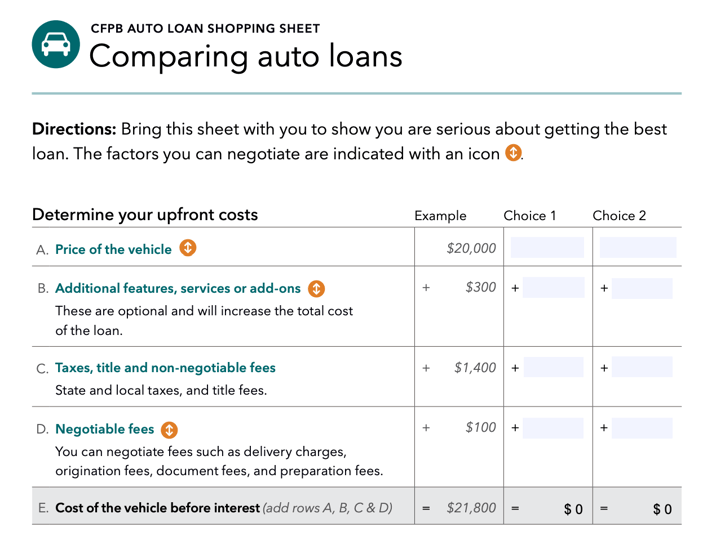
Compare price, financing, fees, and add-ons, via Consumer Financial Protection Bureau.
Policymakers face a broader enforcement question. Clear disclosure rules improve transparency only when advertised prices match transaction documents and regulators can identify violations. Complaint data, retained advertisements, buyer worksheets, and periodic compliance reporting can help measure whether the agreement changes dealership practices.
Wrap Up
FTC allegations against Greenway illustrate how an attractive online price can lose meaning when mandatory charges or restricted rebates appear later. A legally enforceable total-price requirement could make comparison shopping more reliable by moving unavoidable dealer costs into the number consumers initially see.
Real accountability will depend on court approval, compliance monitoring, and buyers receiving consistent prices across advertisements, telephone conversations, and purchase documents. Consumers can protect themselves now by requesting written out-the-door prices and checking every charge before signing.