
Financial Literacy
For millions of workers, keeping a car insured is becoming another barrier between a household budget and a dependable paycheck.
What to Know
- The average annual auto insurance premium reached $2,256 in 2026, up 3% from the previous year.
- Auto insurance prices have risen about 74.6% since 2016.
- Rates increased by more than 50% in 6 states, while Nevada and Louisiana saw premiums double.
- 27% of surveyed consumers said they could not afford their auto insurance deductible.
- Vehicle values, repairs, labor, and fraudulent claims continue to pressure premiums.
Americans need cars to reach work, school, medical care, and basic services. Yet The Zebra’s 2026 State of Auto Insurance report places the average annual premium at $2,256, even after the national increase slowed to 3%.
That average hides a sharper divide. Premiums have climbed about 74.6% since 2016, and some states face much steeper increases. Auto insurance is becoming a test of whether households can keep access to work and daily life.
Why Premiums Keep Rising
Modern vehicles cost more to repair because ordinary damage can involve sensors, cameras, electronics, specialized parts, and skilled labor. eInsurance identifies vehicle prices, parts, labor, inflation, and fraudulent claims as major pressures on premiums.
Higher claim costs return as higher premiums. The Zebra found that 6 states experienced increases above 50%, while rates doubled in Nevada and Louisiana. The result is a national problem with sharply different local consequences.
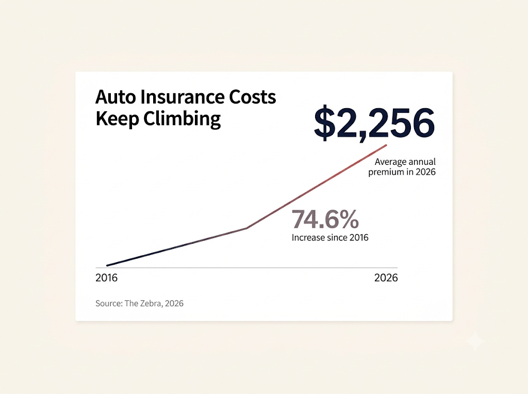
Average Annual Auto Premiums Reach New Household Highs. Created via Gemini.
Premium growth is not driven by one cause. It reflects the rising cost of vehicles, repairs, risk, and losses. Those pressures become a mobility crisis when consumers cannot absorb them.
The Hidden Mobility Crisis
Households facing a large renewal increase may raise their deductible, reduce coverage, delay other bills, or consider driving without insurance. Each option transfers more risk back to the driver.
The Zebra found that 27% of consumers could not afford their deductible. Many drivers may have coverage but still lack the cash needed after a collision, theft, or major repair.
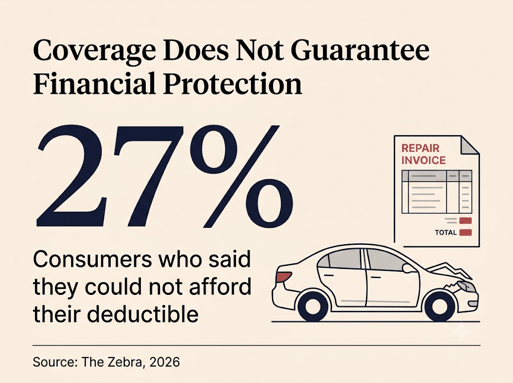
High Deductibles Leave Many Drivers Financially Exposed Today. Created via Gemini.
For workers without reliable public transportation, losing vehicle access can mean losing shifts, interviews, child care arrangements, or medical appointments. The pressure reaches beyond an insurance bill. It can weaken a household’s ability to earn income.
Who Feels It Most
Lower-income households feel the same premium more sharply because insurance takes a larger share of available cash. The Zebra reports a national median premium of $1,933, equal to 2.6% of per-capita income, but affordability varies widely by state.
Drivers in high-cost states, households with limited savings, and workers who depend on vehicles for delivery, contract, or shift work have less room to absorb increases. A higher deductible may lower the monthly bill but create a larger emergency later.
The hardest-hit consumers have the fewest transportation alternatives and the smallest financial cushions. That makes premium growth an economic mobility problem. It also raises the question of whether state policy is keeping pace.
Where Policy Falls Short
Auto insurance is regulated mainly at the state level, which helps explain why premiums can fall in one state and surge in another. The Zebra found that 21 states and the District of Columbia recorded decreases, while 29 states recorded increases.
Regulators must balance insurer solvency with affordability, but households experience the result through one bill. Better public rate data, clearer explanations, stronger fraud enforcement, and easier comparison tools could help consumers respond.
The policy challenge is keeping insurance markets functional without pushing vehicle access beyond the reach of working households. That question leads directly to the future of affordable commuting.
Wrap Up
Auto insurance is not a luxury for households that depend on a car to earn income and meet daily responsibilities. When premiums rise faster than a family’s ability to pay, drivers face weaker coverage, unaffordable deductibles, or loss of vehicle access.
The national average does not capture every household, but the direction is clear. Keeping a car on the road increasingly requires more than fuel and maintenance. It requires an insurance market that protects drivers without pricing them out of economic participation.