
AI Infrastructure
Landowners who supported Virginia’s Digital Gateway project say local opposition did not only stop a development. It also limited their ability to decide the future of their own property.
What to Know
- Landowners along Pageland Lane helped assemble roughly 800 acres for the Prince William Digital Gateway initiative.
- Planning for the proposed project eventually expanded to more than 2,000 acres.
- Prince William County approved rezonings for the project in December 2023.
- QTS terminated the project and withdrew related filings in July 2026 after litigation and sustained local opposition.
- Prince William County reported $293.7 million in data-center tax revenue for tax year 2024 from its existing facilities.
Debates over data centers often focus on power demand, water use, noise, land use, and utility costs. Each concern deserves a clear answer. Yet another question can disappear from the discussion: what happens to owners who want to sell or develop their own land when a community rejects a project?
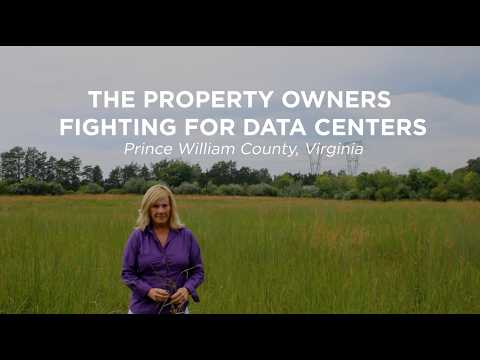
Prince William County landowners discuss Digital Gateway. Taxpayers Protection Alliance.
A new Taxpayers Protection Alliance video tells that story through Prince William County landowners who supported the Prince William Digital Gateway initiative. Their account does not settle the environmental or planning debate. It does show why policymakers must consider property rights, local economic opportunity, and community safeguards together rather than treating any one concern as the only public interest.
Landowners Saw a Different Kind of Opportunity
TPA interviewed two long-time Pageland Lane landowners who said their families had assembled roughly 800 acres for data-center development. According to TPA, the planning area later grew to more than 2,000 acres.
For those owners, the project represented more than a commercial transaction. Their testimony described family farms that had become costly to maintain and a desire to pass resources to children and grandchildren. One speaker described data-center development as a possible financial lifeline after years of supporting land that no longer produced enough farm income.
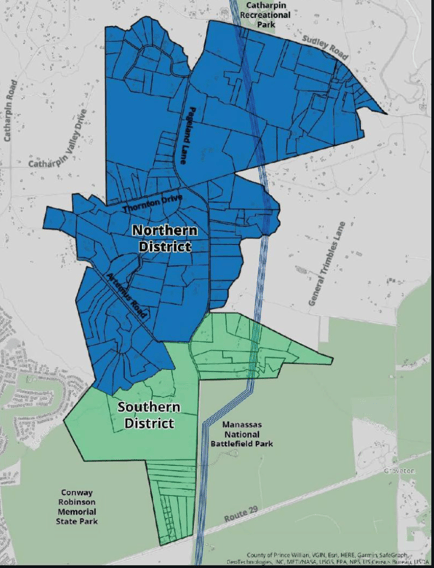
PW Digital Gateway study area: 194 parcels and 2,139 acres. Prince William County.
Property ownership does not give anyone an automatic right to build any project anywhere. Zoning, safety, environmental review, and public participation still matter. Landowners, however, have a legitimate interest in predictable rules and a fair chance to propose a lawful use of their property.
Public debate becomes more difficult when that interest receives little attention. Residents who oppose a project may seek to protect nearby homes, historic resources, water supplies, or local infrastructure. Owners who support a project may see it as their best available path to preserve family wealth or fund retirement. Local governments must weigh both perspectives through a process that explains how decisions are made.
That need for a fair process became especially clear once the Digital Gateway proposal entered the county approval and court system.
A Project Can End Even After Local Approval
Prince William County’s Board of County Supervisors approved rezoning for Digital Gateway in December 2023. Litigation later challenged the approvals, and courts voided the rezonings over a public-notice dispute, according to TPA.
QTS ultimately ended the project and withdrew its related filings in July 2026, Reuters reported. That outcome means Digital Gateway should not be treated as a project still awaiting a final local decision.
Its history still matters. Court review can protect important procedural rights, including requirements for public notice. At the same time, lengthy uncertainty can affect landowners, nearby residents, developers, and local planning. Years of hearings, legal disputes, and changing rules make it difficult for every party to know whether a project will move forward.
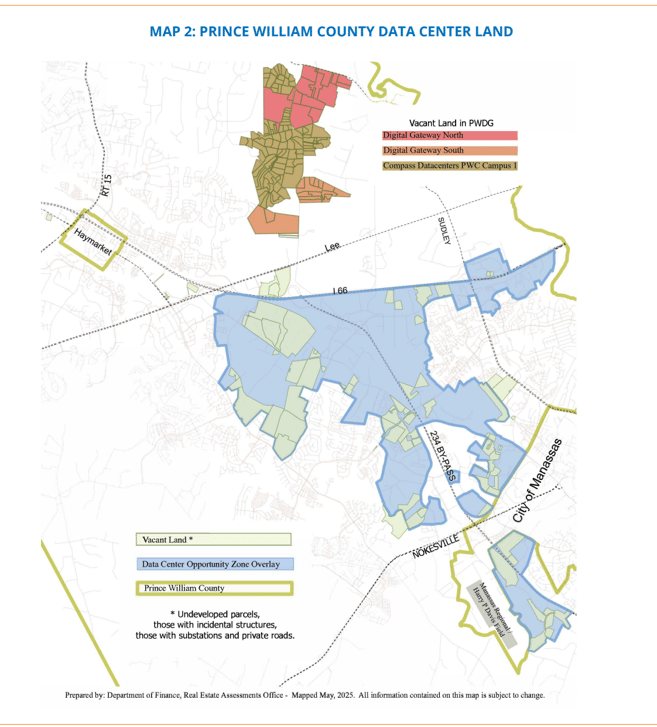
Digital Gateway land parcels and overlay district. Prince William County.
Local governments can reduce that uncertainty by establishing data-center rules before individual applications arrive. Clear zoning districts, measurable noise limits, water and energy requirements, and defined public-hearing procedures give communities a basis for evaluating a project on its merits.
Fiscal questions provide another reason to make those rules clear before a dispute reaches the courtroom.
Tax Revenue Does Not Eliminate the Need for Safeguards
Prince William County’s 2024 Data Center Revenue Report reported $293.7 million in total tax revenue from existing data centers. That figure does not show what Digital Gateway would have generated, and it does not determine whether any future project should receive approval.
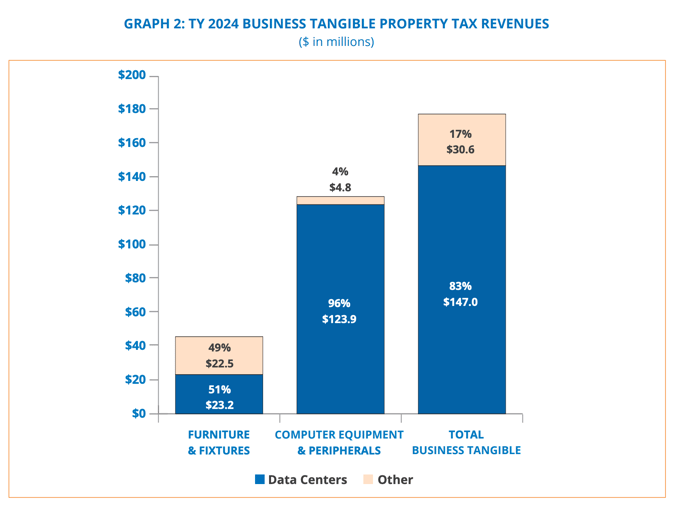
Data-center tax revenue summary for 2024. Prince William County.
Still, it illustrates why counties take data-center proposals seriously. Revenue from commercial facilities can support public services or reduce pressure on other local revenue sources. Developers also point to construction activity, long-term operations, and related investment as potential benefits.
Communities must compare those benefits with actual local costs. New substations, transmission upgrades, road improvements, water infrastructure, and emergency services can create expenses or disruptions. Residents also need usable information about noise, building scale, backup generators, and the effect on nearby properties.
Specific safeguards can address those concerns more directly than a blanket ban. Local officials can require developers to fund infrastructure directly related to a project, publish operating commitments, comply with setbacks and noise limits, and provide meaningful public notice. Independent technical reviews can help local governments assess complex impacts without relying only on a developer’s claims.
Careful standards protect communities, but they also protect landowners and developers from decisions based on unclear or shifting expectations.
Property Rights and Local Control Must Work Together
Data-center policy does not require a choice between unrestricted development and permanent prohibition. Property rights matter because people should have a meaningful opportunity to use, sell, or improve their land within transparent rules. Local control matters because neighbors and public officials must manage real effects on infrastructure, natural resources, and quality of life.
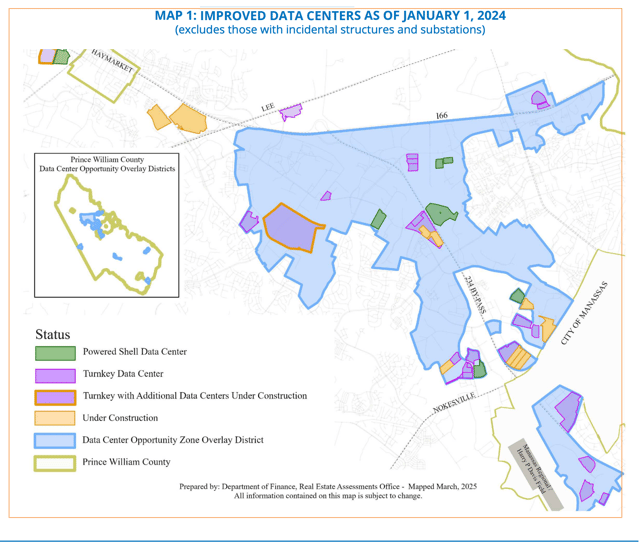
Data-center locations and overlay district. Prince William County.
For households, a sound process should answer practical questions early: Will a project raise local costs? Who pays for new infrastructure? What protections apply to nearby homes? What revenue will the county receive, and how will it use it?
For landowners, a sound process should answer a different but equally important question: If a project meets clear standards, can they make a long-term decision about their property without facing years of uncertainty?
Digital Gateway’s cancellation does not resolve the national data-center debate. It does show why communities need rules that protect residents while respecting the people whose land makes development possible.
Wrap Up
TPA’s video highlights a perspective that often receives less attention in data-center disputes: owners may view development as a voluntary opportunity to support their families and decide their property’s future.
Prince William County also shows why process matters. Community concerns require real safeguards and meaningful review. Property owners need transparent standards, timely decisions, and a fair opportunity to pursue lawful development.
Lasting local policy will depend on whether communities can provide both. Clear rules can protect public interests without turning every data-center proposal into an all-or-nothing conflict.