Financial Literacy
New IRS procedures could help savers correct certain IRA errors beginning in May 2027. Until then, existing rollover-waiver rules and private-letter-ruling procedures remain in place.
What to Know
- A new IRA Compliance Resolution System will become effective on May 1, 2027.
- Initial coverage is limited to four defined types of inadvertent failures.
- Automatic rollover waivers and self-certification remain available without an IRS fee for taxpayers who qualify.
- Some rollover-waiver requests will transition from private letter rulings to the new system during 2027 and 2028.
- A regular ICRS submission filed during 2027 will require a $3,500 user fee.
Treasury and the IRS have created a formal process for resolving certain IRA mistakes caused by financial institutions and other service providers. Called the IRA Compliance Resolution System, or ICRS, the program could help account owners restore tax-favored treatment after an eligible inadvertent failure.
Savers cannot use that process yet. Revenue Procedure 2026-33 makes ICRS effective on May 1, 2027, while the IRS announcement preserves several existing rollover remedies. Distinguishing what is available now from what arrives next year is essential for anyone facing a deadline or account error.
What Savers Can Do Now
Current rules provide three possible paths when someone misses the normal 60-day rollover deadline.
An automatic waiver may apply when a financial institution received the funds before the deadline, the taxpayer followed its deposit procedures, and the delay occurred solely because of the institution’s error. Funds generally must be deposited within one year from the beginning of the rollover period, and the transaction must otherwise qualify as a valid rollover.
Self-certification offers another no-fee route when an eligible circumstance prevented completion on time. Taxpayers use the model letter in applicable IRS guidance and provide it to the institution receiving the late contribution. Contribution must occur as soon as practicable after the problem ends, usually within 30 days.
Self-certification does not constitute an IRS waiver. A receiving institution may rely on the letter, but the IRS can later determine during an examination that the taxpayer did not qualify.
Anyone who cannot use either route may currently request a private letter ruling. That process requires a formal application, supporting documents, and a user fee. Approval depends on the individual facts and circumstances.
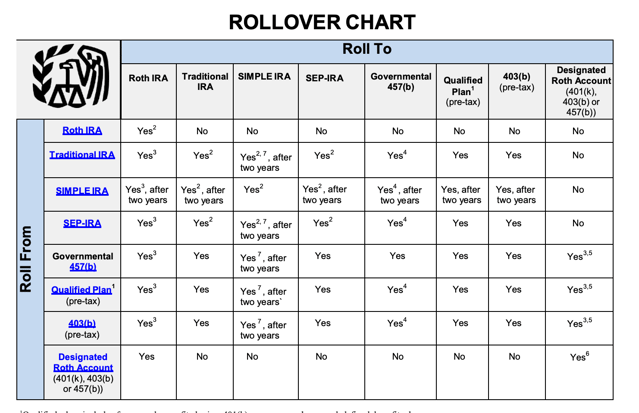
IRS guidance identifies which retirement accounts can receive funds from IRAs and employer plans, although separate deadlines and eligibility rules still apply, via Internal Revenue Service.
Those existing options remain important because waiting for ICRS will not pause a tax deadline or preserve an expiring refund claim.
What Changes on May 1, 2027
ICRS will initially consist of the IRA Voluntary Correction Program, or IVCP. IRA owners and custodians will be able to submit eligible failures for IRS review through Pay.gov, propose a correction, pay the applicable fee, and request a binding compliance statement.
IRS guidance allows submissions from IRA owners as well as custodians. Custodians may also make group submissions involving multiple affected account owners, provided each owner chooses to participate.
Successful correction generally seeks to restore the IRA and its owner to the position they would have occupied without the failure. Earnings, distributions, tax reporting, and account documentation may need to be adjusted.
ICRS does not currently permit an owner or custodian simply to self-correct an eligible IRA failure without IRS involvement. Applications cannot be anonymous, and taxpayers must be current on applicable income-tax filing obligations.
General eligibility is also restricted when an owner’s return is under examination. Special rollover-waiver relief may still be considered during an examination under separate rules.
Understanding the four eligible categories shows how limited the first version will be.
Which IRA Mistakes May Qualify?
|
Eligible failure |
What must have happened |
|
Required minimum distribution failure |
A service-provider mistake caused an IRA owner to receive less than the required distribution |
|
IRA establishment failure |
A provider opened the wrong type of IRA or created a non-IRA account after receiving different instructions |
|
Nonspouse beneficiary distribution or rollover failure |
Provider error caused an inherited-IRA amount to be distributed or transferred incorrectly instead of using the required trustee-to-trustee process |
|
60-day rollover failure |
Circumstances beyond the owner’s reasonable control prevented an otherwise eligible rollover from being completed on time |
An eligible inadvertent failure cannot be egregious, involve diversion or misuse of IRA assets, or relate to an abusive tax-avoidance transaction.
Service-provider errors can involve an IRA custodian, certified financial planner, fiduciary financial adviser, certified public accountant, or licensed attorney with a relevant service agreement. Eligibility depends on the complete facts rather than a consumer’s description alone.
IRA establishment failures face a special deadline. Applications should be made as soon as practicable and no later than December 31 of the year following the year in which the incorrect account was established.
Failures involving SEP arrangements or SIMPLE IRA plans generally belong under the separate Employee Plans Compliance Resolution System. Errors involving an individual SEP IRA or SIMPLE IRA may qualify for ICRS when they otherwise satisfy its requirements.
Not every excess contribution, investment loss, incorrect withdrawal, or bad recommendation will fit one of the four categories. Treasury and IRS have invited comments about additional failures that future versions could cover.
A Practical Decision Path
|
Situation |
Available before May 1, 2027 |
Available beginning May 1, 2027 |
|
Financial institution alone caused a late rollover |
Check the automatic-waiver requirements |
Automatic waiver remains available; ICRS may provide an additional route |
|
Recognized circumstance prevented a timely rollover |
Consider no-fee self-certification |
Self-certification remains available; ICRS may provide formal IRS review |
|
Neither no-fee procedure applies |
Consider a private-letter-ruling request |
During 2027, consider either a ruling request or ICRS |
|
Custodian opened the wrong IRA |
Seek professional advice and ask the custodian about available corrective steps |
Evaluate whether the IRA establishment failure qualifies for ICRS |
|
Service-provider error caused a missed RMD |
Correct the distribution and review existing excise-tax waiver procedures |
Consider ICRS or any less costly existing remedy that applies |
|
Return is already under IRS examination |
Obtain professional advice because ordinary ICRS eligibility is generally unavailable |
Separate rollover-waiver relief may still be considered in qualifying cases |
Savers should contact the custodian before preparing an ICRS application. IRS guidance recommends confirming that an institution can carry out the proposed correction because a compliance statement cannot force an unrelated custodian to accept transferred funds.
Fees Could Shape Access
Regular ICRS submissions filed before January 1, 2028, will require a $3,500 fee. Group submissions will start at $10,000 for the first ten affected owners, add $250 for each additional owner, and carry a maximum fee of $50,000.
Future fees will appear in the IRS’s annual employee-plans revenue procedure. Professional costs for legal, tax, or actuarial assistance may add to the government charge.
Existing automatic-waiver and self-certification procedures remain available without an IRS fee. Savers who qualify for a no-cost remedy may therefore have little reason to pay for IVCP solely to obtain relief for a missed rollover.
A paid submission may still offer value when a saver needs a binding IRS compliance statement, has a provider-caused error outside the no-fee procedures, or faces tax consequences requiring a more formal resolution.
Access will depend on whether ordinary households can understand the application, assemble the required documentation, calculate earnings adjustments, and obtain custodian cooperation without incurring excessive professional costs.
What Happens During the Transition?
For calendar year 2027, taxpayers may request a 60-day rollover waiver through either ICRS or the applicable private-letter-ruling process. Starting in 2028, IRS anticipates allowing those requests only through ICRS.
Automatic waiver and self-certification do not disappear during that transition. Both remain available for eligible taxpayers under existing revenue procedures.

Rollover-waiver requests begin transitioning to ICRS in May 2027, while eligible automatic waivers and self-certification remain available, via Internal Revenue Service.
Treasury and IRS requested public comments by January 20, 2027, particularly on additional failures that future versions of ICRS could address. Later comments may be considered when doing so would not delay further guidance.
Policymakers and administrators should examine processing times, application completion rates, user fees, denial reasons, custodian participation, and whether lower-balance savers can use the system effectively. Publication of those measures would show whether ICRS improves access or merely replaces one complex paid procedure with another.
Wrap Up
ICRS creates a formal path for correcting four categories of IRA failures, but it is not available today. Savers facing a current problem should review the existing automatic-waiver, self-certification, excise-tax, and private-letter-ruling procedures instead of waiting until May 2027.
Future applicants will need to confirm that a mistake fits an eligible category, resulted from qualifying circumstances, and can be corrected with custodian cooperation. A government fee and possible professional costs will also affect whether the new route is practical.
Clear implementation guidance will determine whether ICRS becomes an accessible consumer remedy or a specialized process used primarily in larger or more complicated cases.